Our Jaegerfest field trip first started in 1999, so this was our 28th year! (We should note, however, that the 2020 event was greatly minimized, due to the COVID pandemic).
The 2026 event proved to be quite interesting, from the standpoint that the temperature and wind direction for the entire weekend varied little — with the temperature remaining between 56 and 58 degrees, and the moderate to fairly strong winds continuously blowing from a NE or ENE direction. Typically, we consider these to be ideal wind conditions for this location, since we expect that they are bringing migrating birds toward our location near the western terminus of the lake — and we weren’t disappointed.
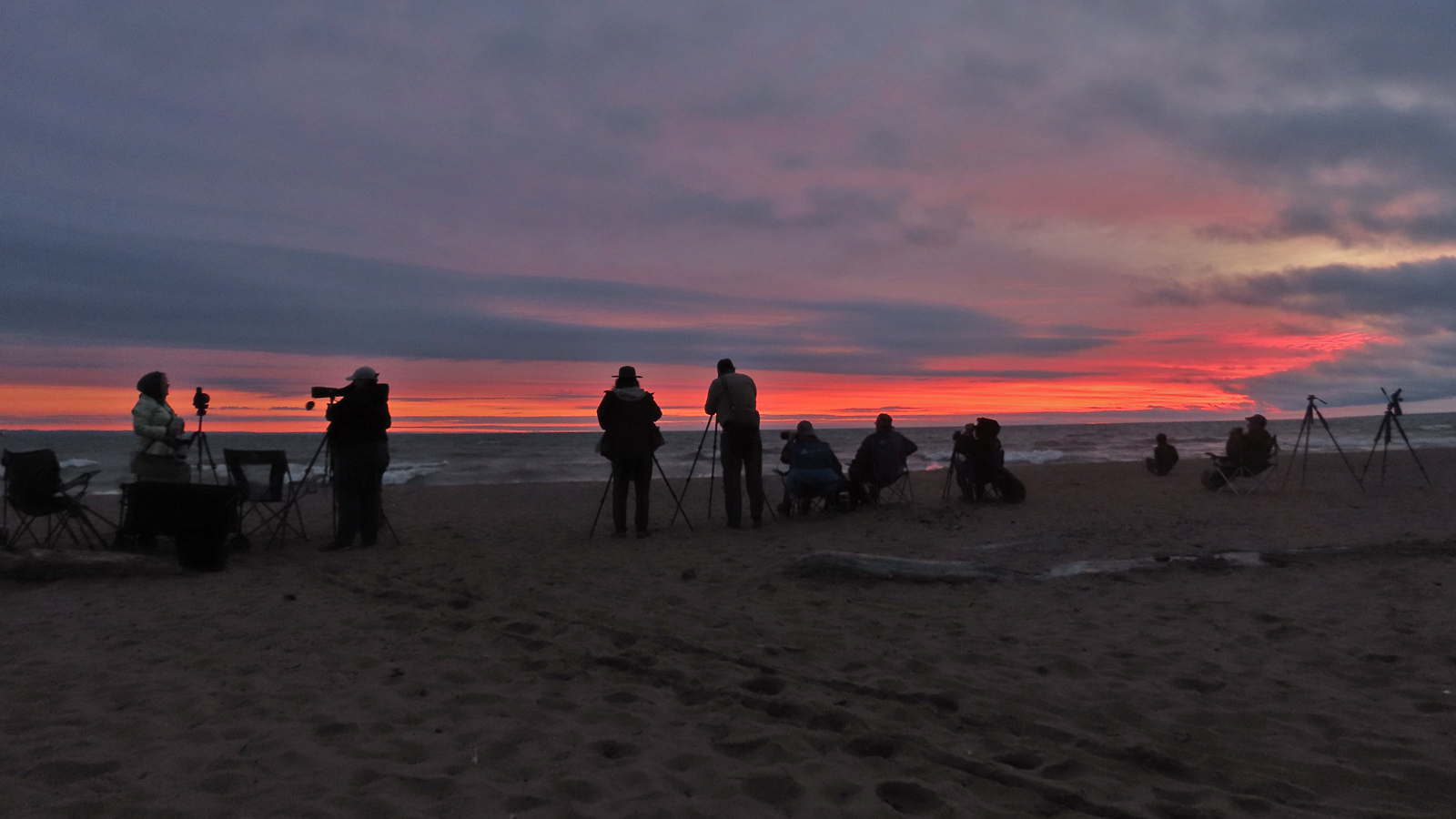
Friday, Sept. 18 – The first birders arrived at our usual beach location on Wisconsin Point around 6:30 AM, just as the skies began to lighten with the impending sunrise. As mentioned earlier, the temperature was 56 degrees, with a moderate wind blowing out of the ENE under mostly cloudy skies.
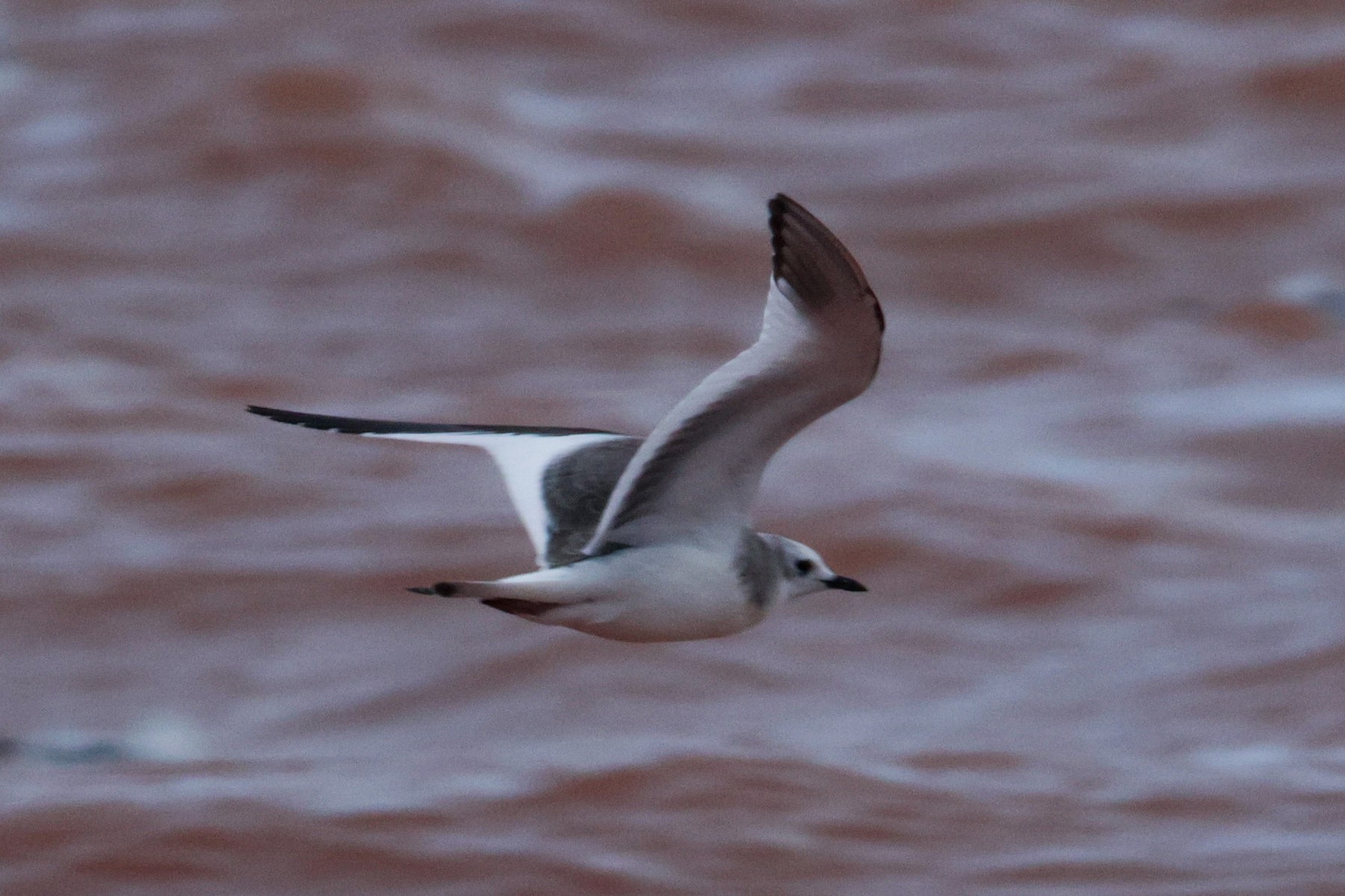
We didn’t have to wait too long for the first big excitement of the day. At 6:50 AM, a Sabine’s Gull was spotted as it flew past the group, giving great looks at its flashy white, black and gray wing pattern!
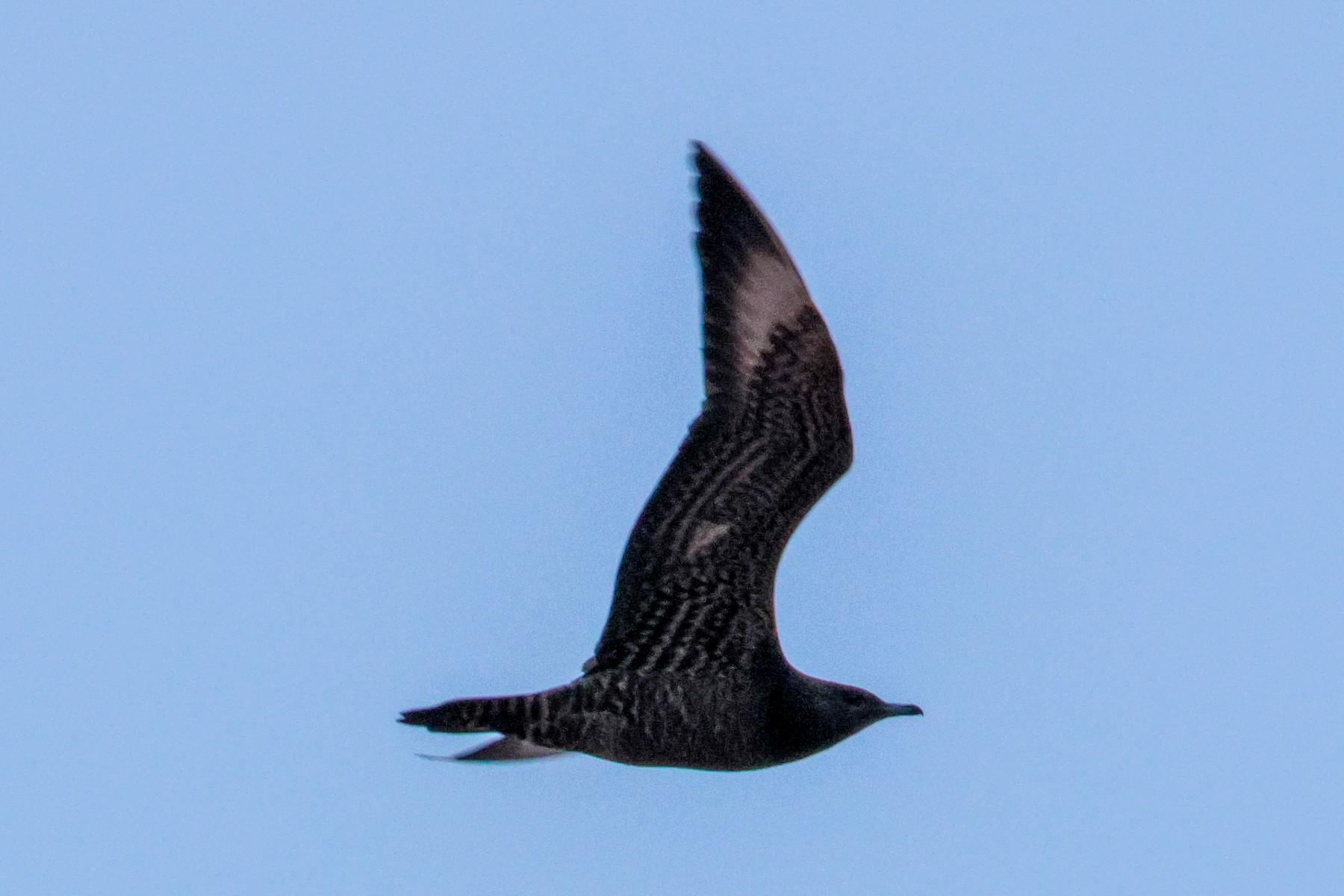
Our first Parasitic Jaeger was spotted about 7:33 AM, a dark juvenile, and we had repeated observations from time-to-time throughout most of the day. At least one other individual was also observed later on a few occasions, which appeared to be a pale sub-adult.
There appeared to be a decent number of waterfowl on the move, especially in the morning. These included Northern Shoveler, Gadwall, American Wigeon, Mallard, Northern Pintail, Green-winged Teal, Redhead, Ring-necked Duck, Greater Scaup, and Common and Red-breasted Mergansers.
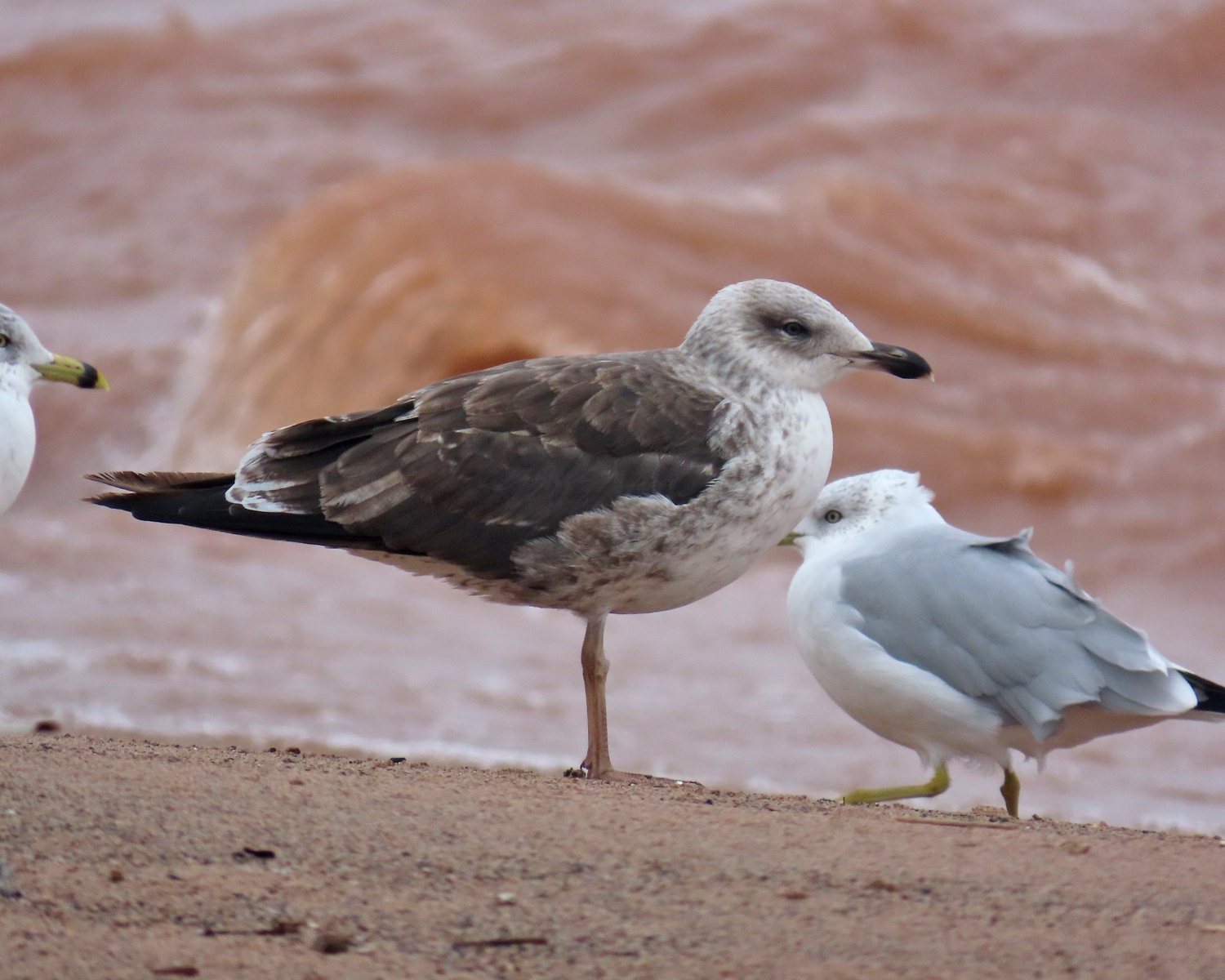
A good number of gulls were present for more of the day — with most being Ring-billed and American Herring Gulls, but at least three Lesser Black-backed Gulls were present at various times — a juvenile, an immature, and a full adult. Also spotted were a few Bonaparte’s Gulls.
Quite a few Common Terns were observed during the day, and were accompanied by a Black Tern on one occasion. A few shorebirds were also spotted along the beach at various times, including Sanderling, American Golden-Plover and Black-bellied Plover.
A variety of songbirds, including warblers, were spotted along Wisconsin Point, but the number of individuals was fairly small compared to other years. Although the birding off the beach was fairly slow, some good excitement was generated at one point in the morning, when a juvenile LeConte’s Sparrow was spotted in the open area near the parking lot!
Saturday, Sept. 19 – Once again, the first birders arrived at the beach were a little before 6:30 AM. The wind was not quite as strong as the day before, but it was still blowing out of the northeast. Fewer waterfowl were flying compared to the day before, but we still saw Canada Goose, Northern Pintail, Green-winged Teal, Greater Scaup and Red-breasted Merganser. The highlight duck, however, was a lone Surf Scoter that flew past us a little before 8:30.
The first Parasitic Jaeger of the day was spotted just before 7:00, with a closer fly-by about 20 minutes later. We estimated that perhaps five different individuals were observed during the day, with some seeming to disappear as they may have continued southward — but an exact count was impossible to determine.
A Sabine’s Gull was spotted about 8:15, and several Bonaparte’s Gulls were observed at various times. What were probably the same three Lesser Black-backed Gulls as the day before were seen again. Several Common Terns were present at various times, as were a couple of Peregrine Falcons, and at one point, a Western Grebe was also spotted.
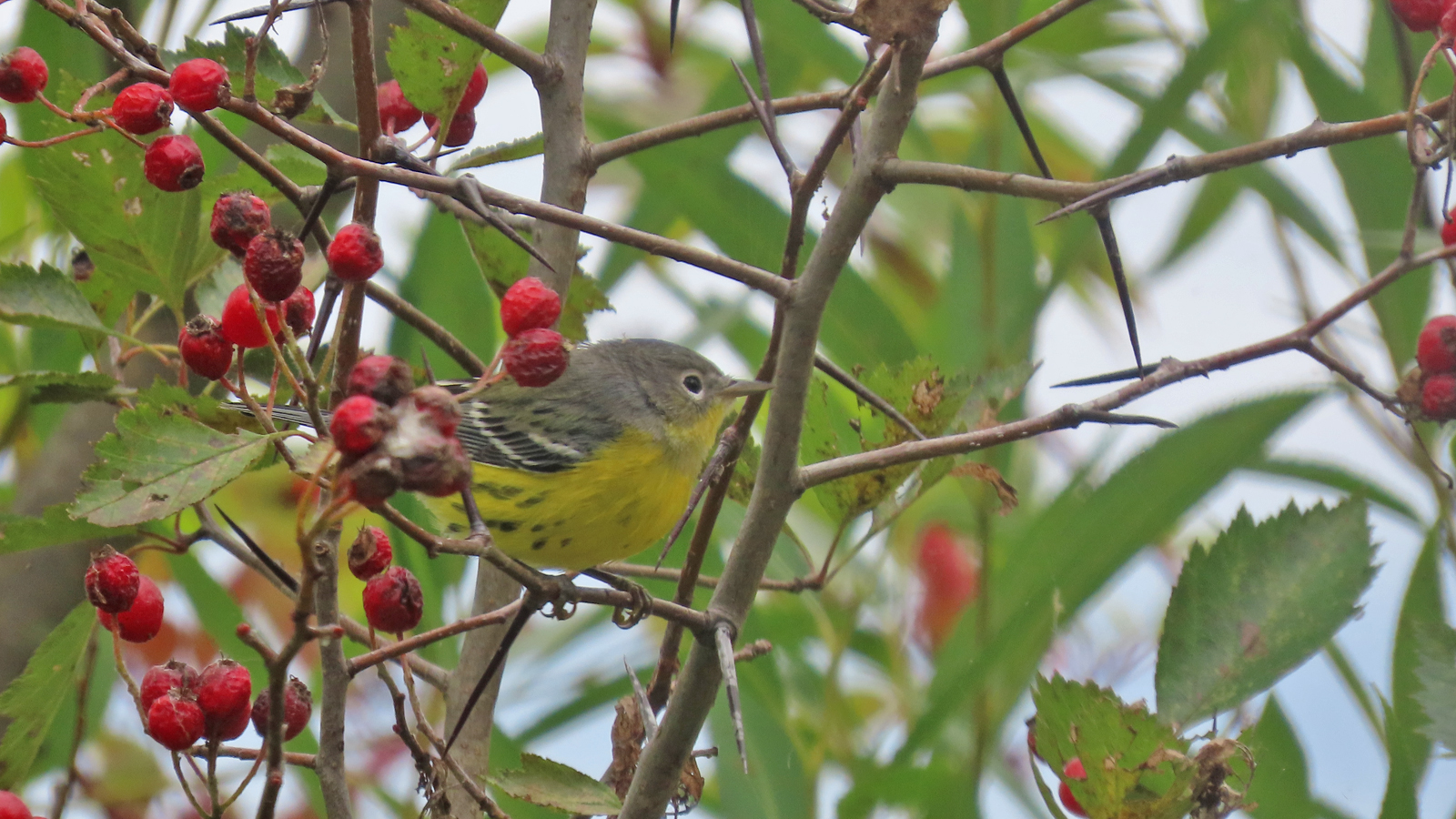
Northern Flickers appeared to be on the move, with numerous individuals being spotted. Once again, the numbers of warblers was few, with Yellow-rumped and Palm being the most common. Others included American Redstart, Magnolia and Blackpoll.
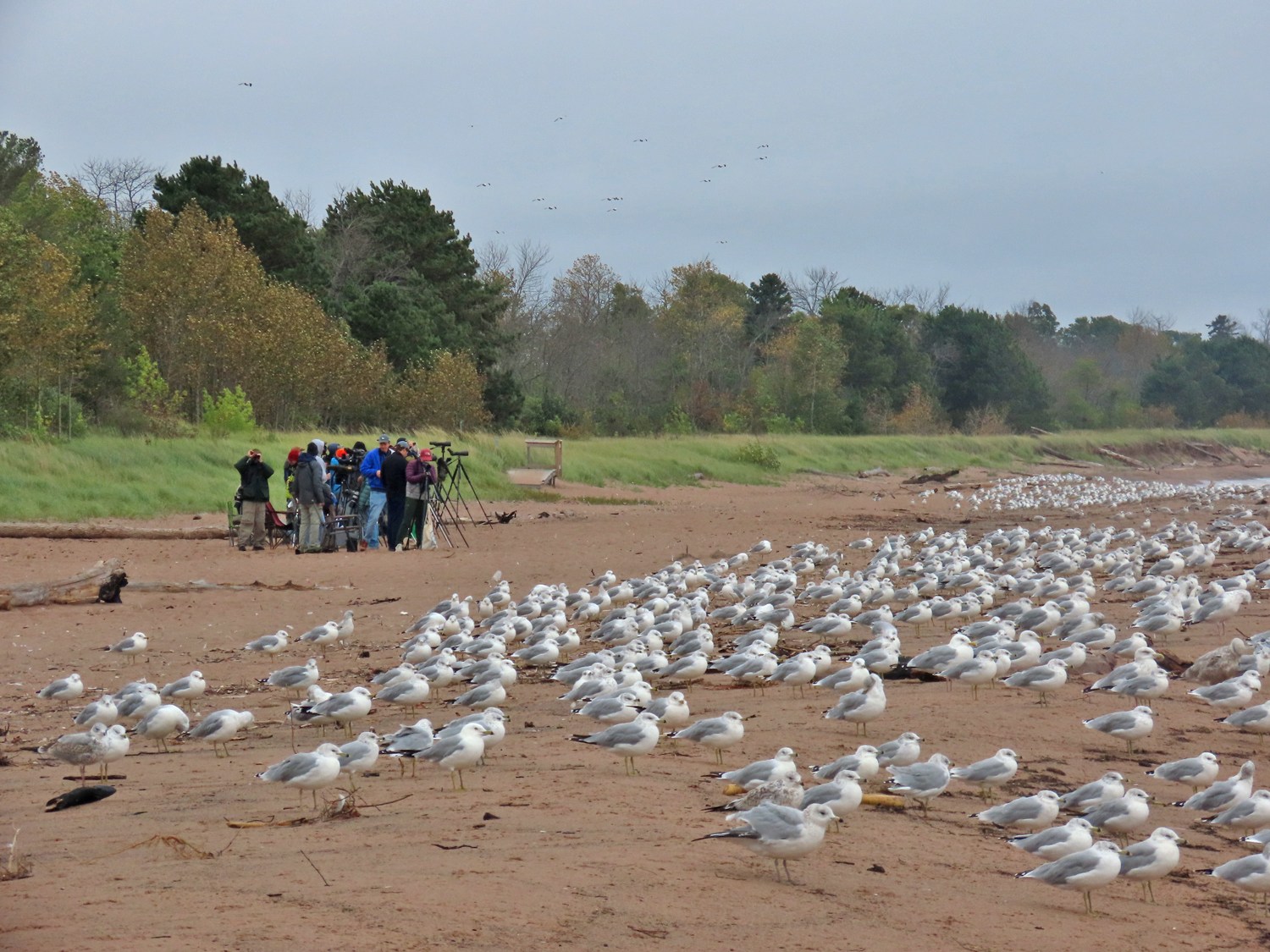
I counted 60 people present on the beach around 8:30, with others arriving later. I estimate that the total was perhaps 90 birders — maybe about the same as the day before.
Sunday, Sept. 20 – There was a stronger wind blowing at dawn, again from the northeast, with the temperature again at 57 degrees. Fewer people were present this morning, with many having left the day before, but there were still at least 30 on the beach.
There appeared to be fewer birds present this morning, but the group spotted another Parasitic Jaeger and three Sabine’s Gulls. At one point we had a close fly-by of a Black-bellied Plover and an American Golden-Plover, providing an excellent opportunity for a side-by-side comparison, with the former showing the diagnostic black “armpits”.
Also present were a few Bonaparte’s Gulls and a nice little flock of Sanderlings that flew past along the beach. At least one Lesser Black-backed Gull was also spotted. Good numbers of Northern Pintails were observed, as well as a lone Green-winged Teal and a few Red-breasted Mergansers.
Jaegerfest 2026 was a successful weekend, with many opportunities to observe Parasitic Jaegers and Sabine’s Gulls. The passerine migration was fairly light compared to other years, but a decent variety of warblers, sparrows, and other birds were found over the three days. I estimate that at least 80 species were observed, altogether.
Tom Schultz – WSO Field Trips